
arXiv-2022 Holistic Evaluation of Language Models
HELM: Holistic Evaluation of Language Models
Summary
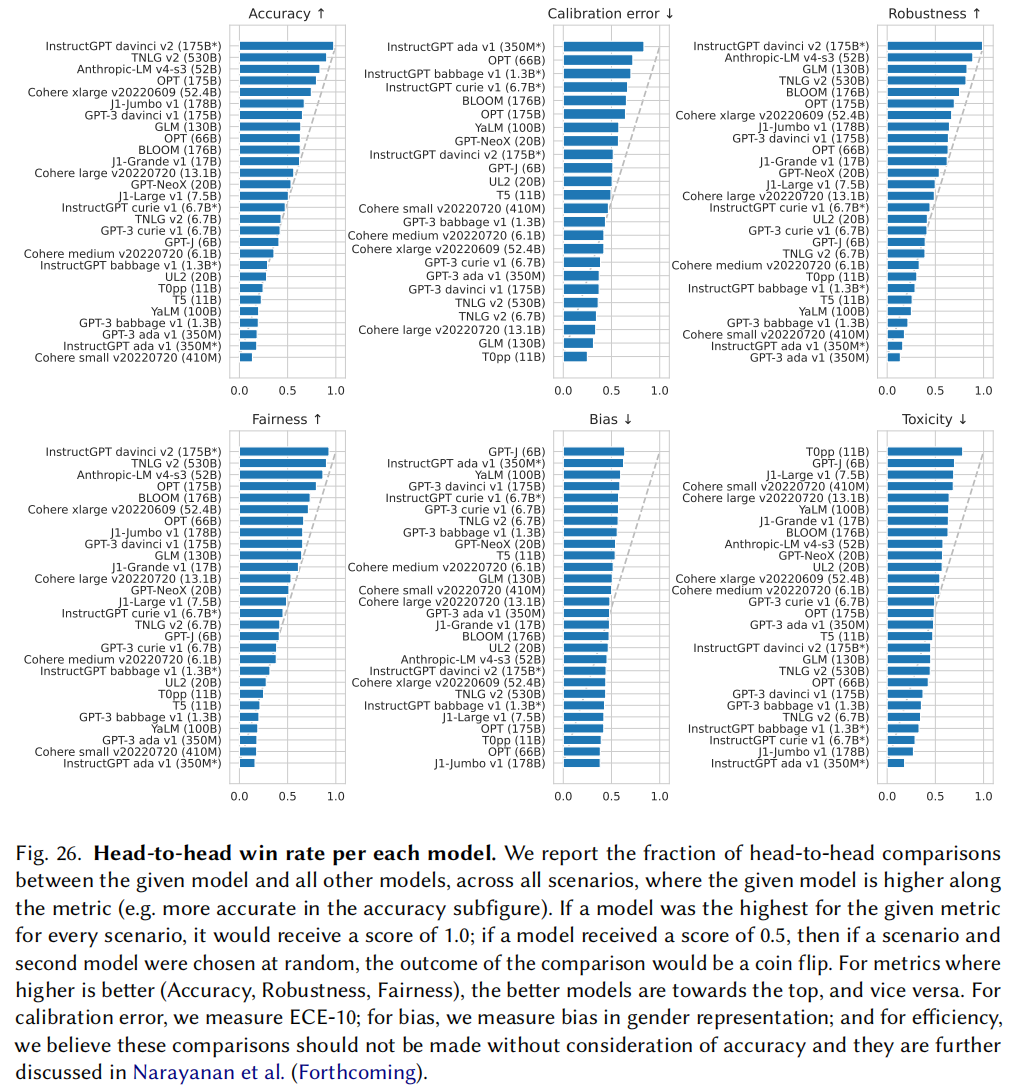
- InstructGPT performs best overall.
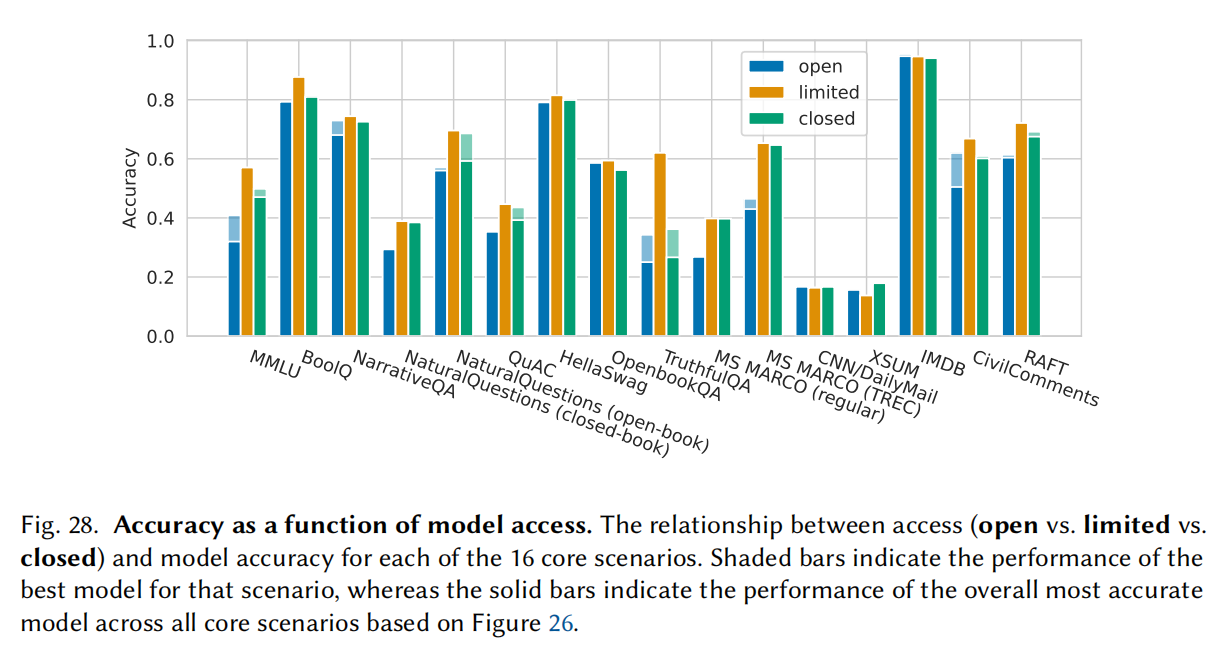
- Open-source models still lag behind closed-source models to a noticeable degree.
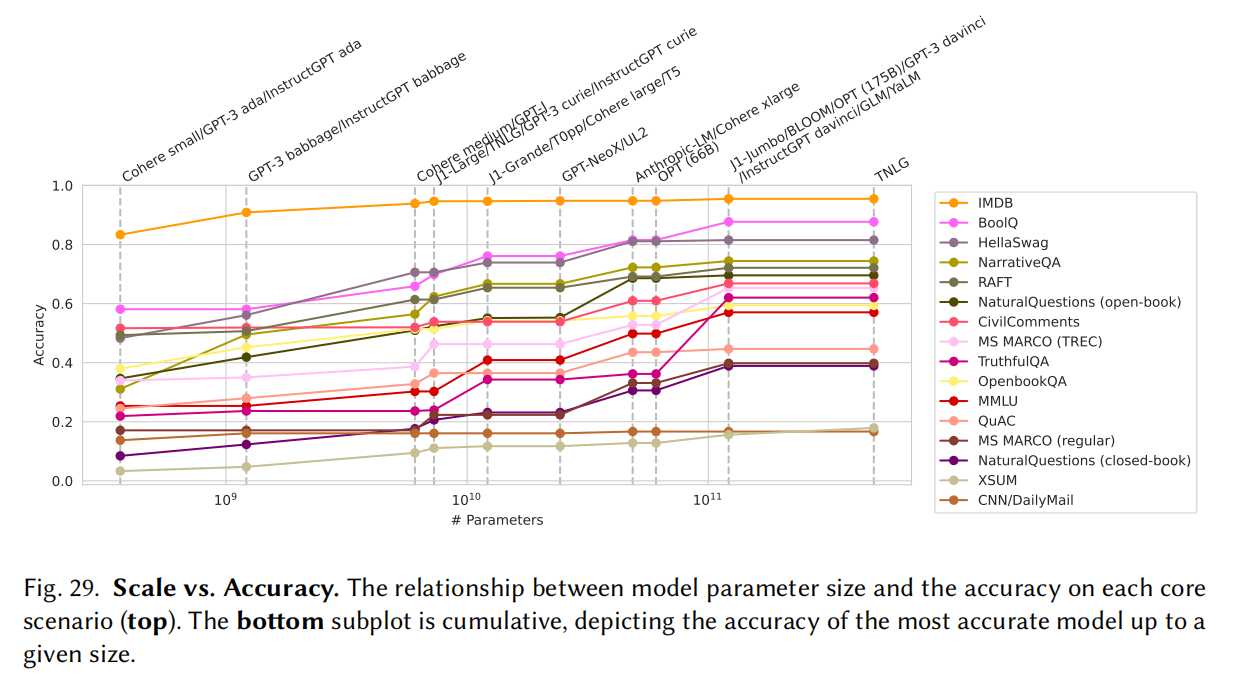
- Larger models are generally better; only above roughly 50B parameters can a model perform well in a given domain.
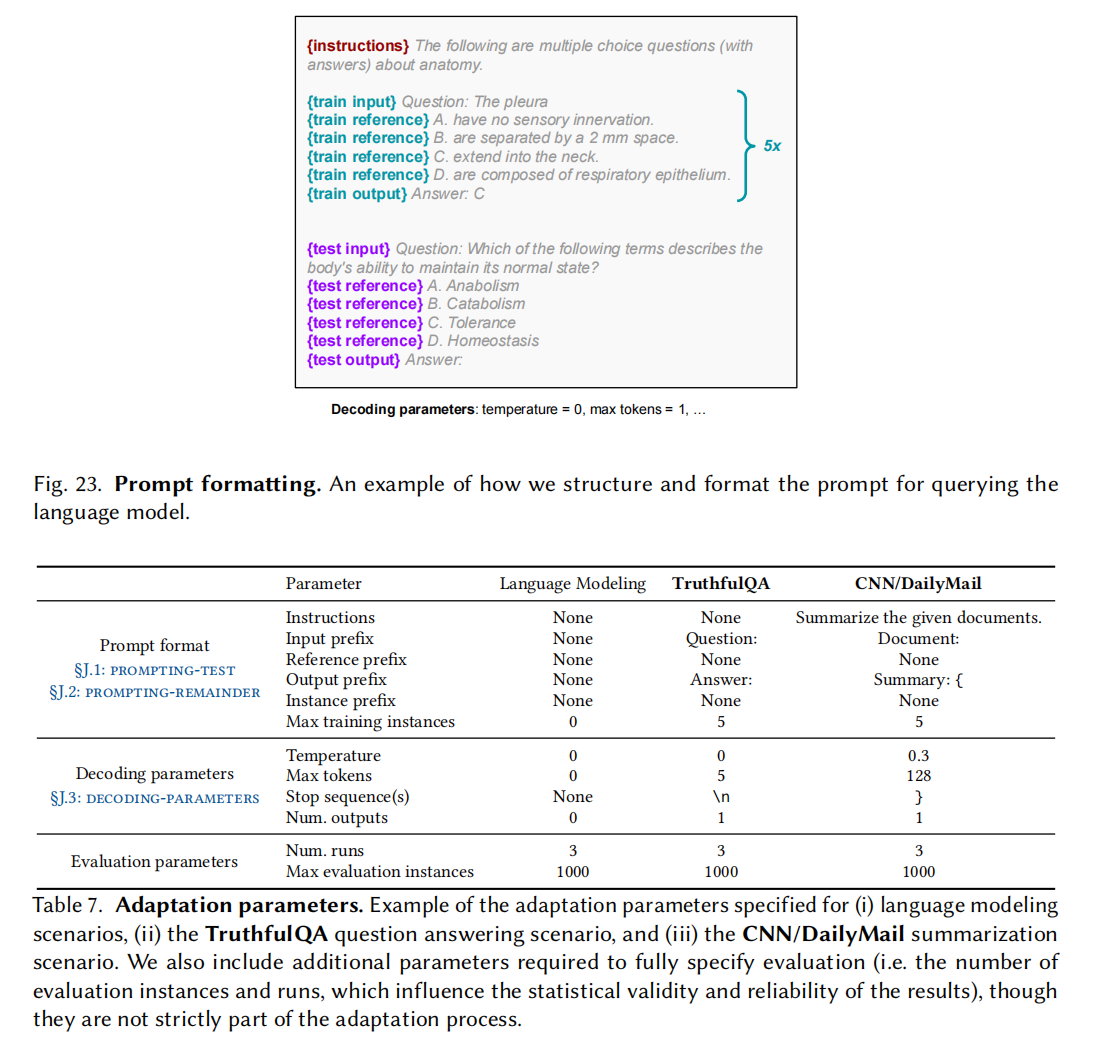
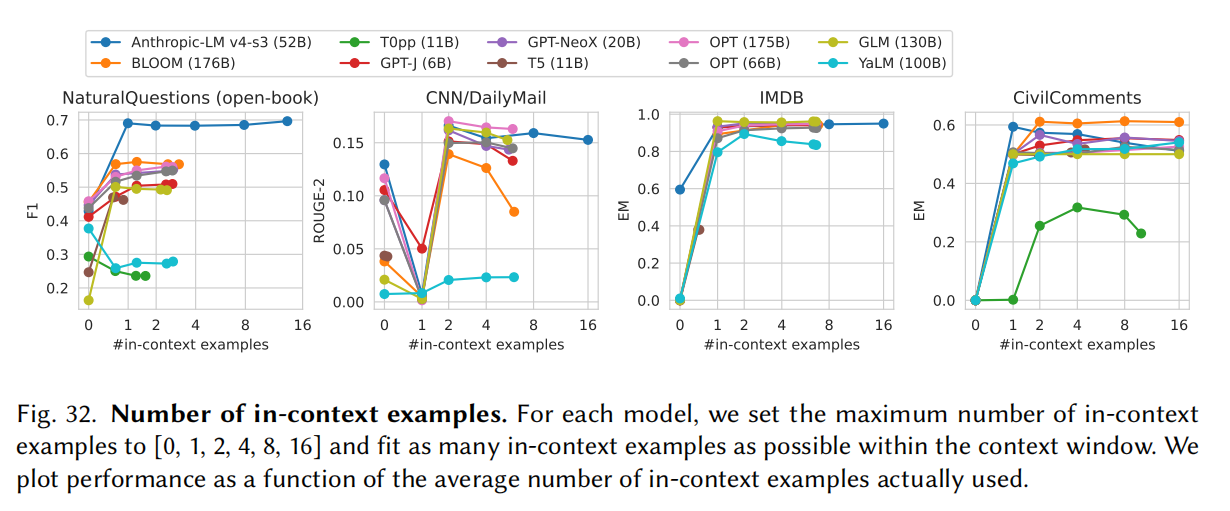
- Prompting helps current models, but performance is highly sensitive to prompt design.
Abstract
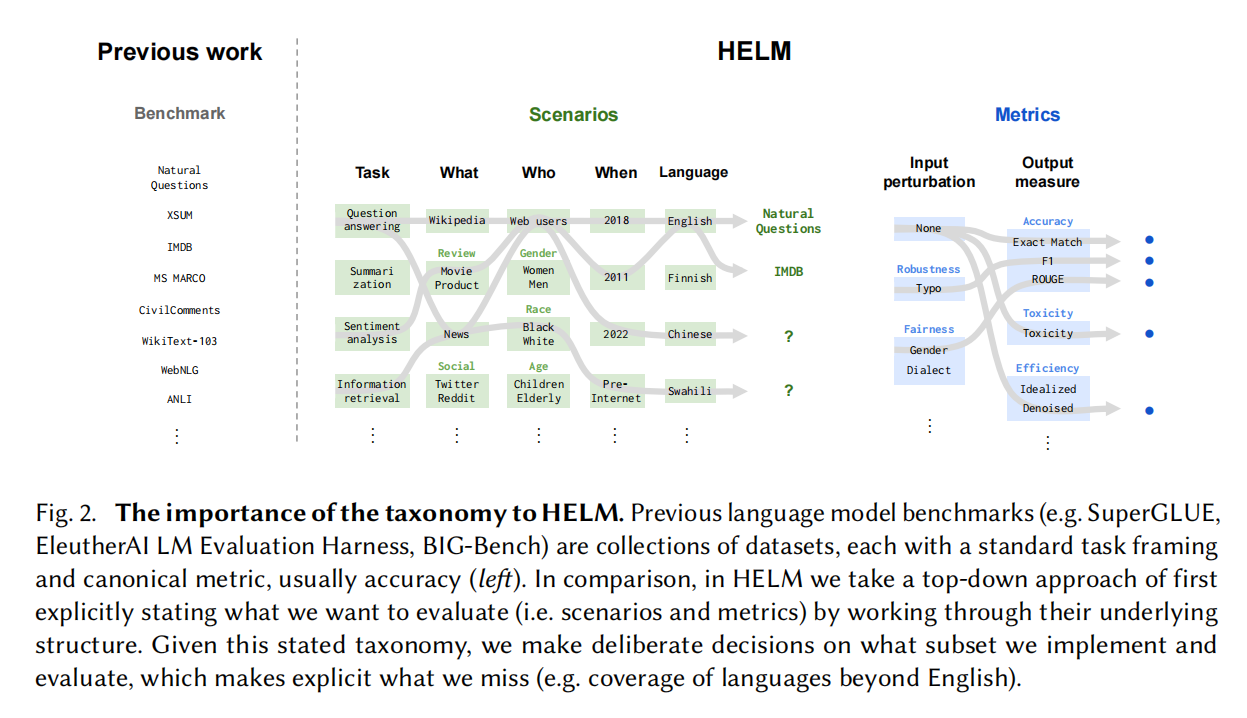
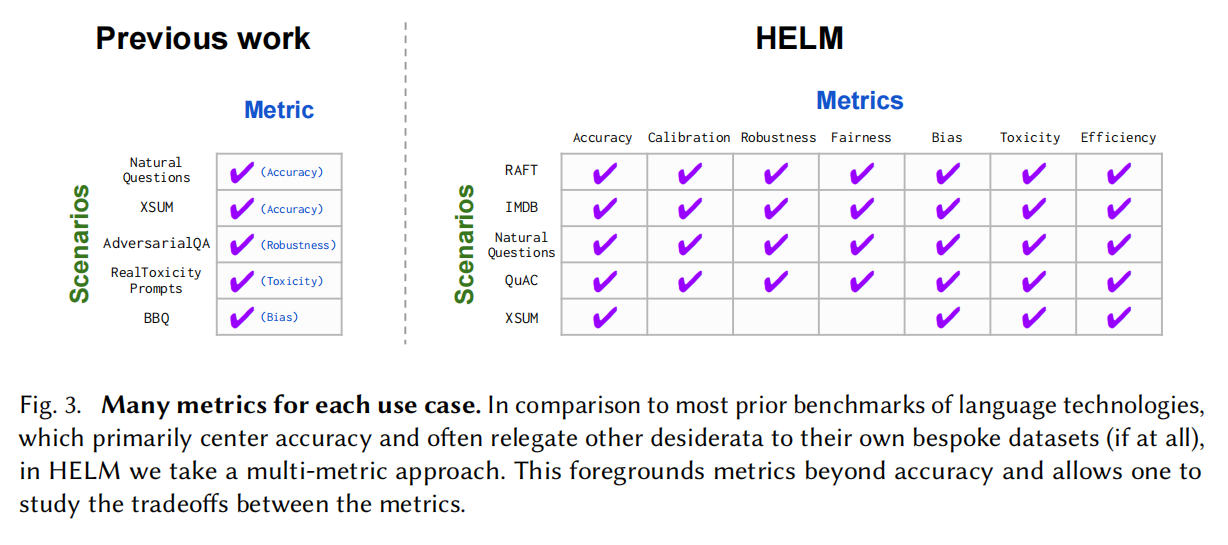
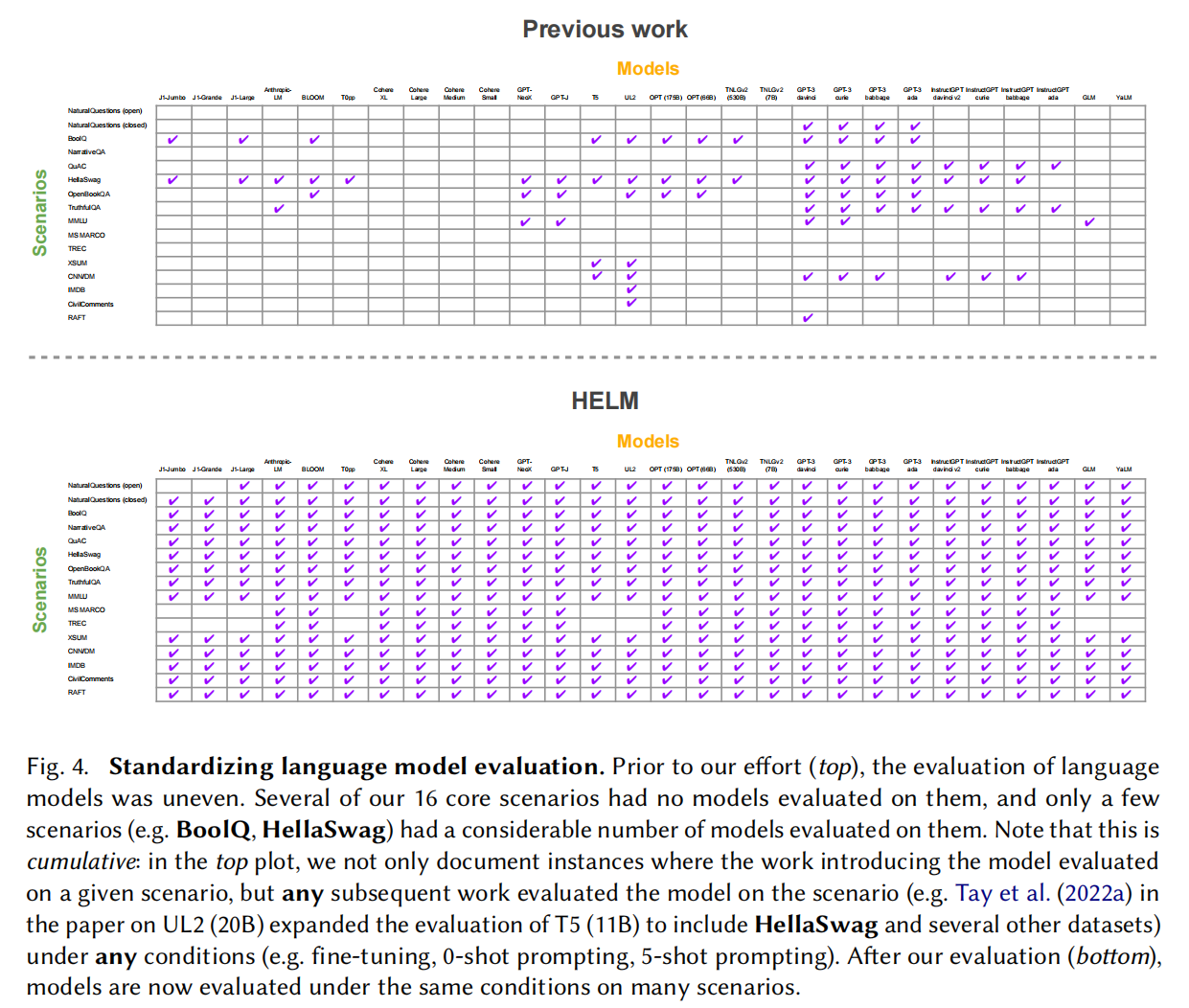
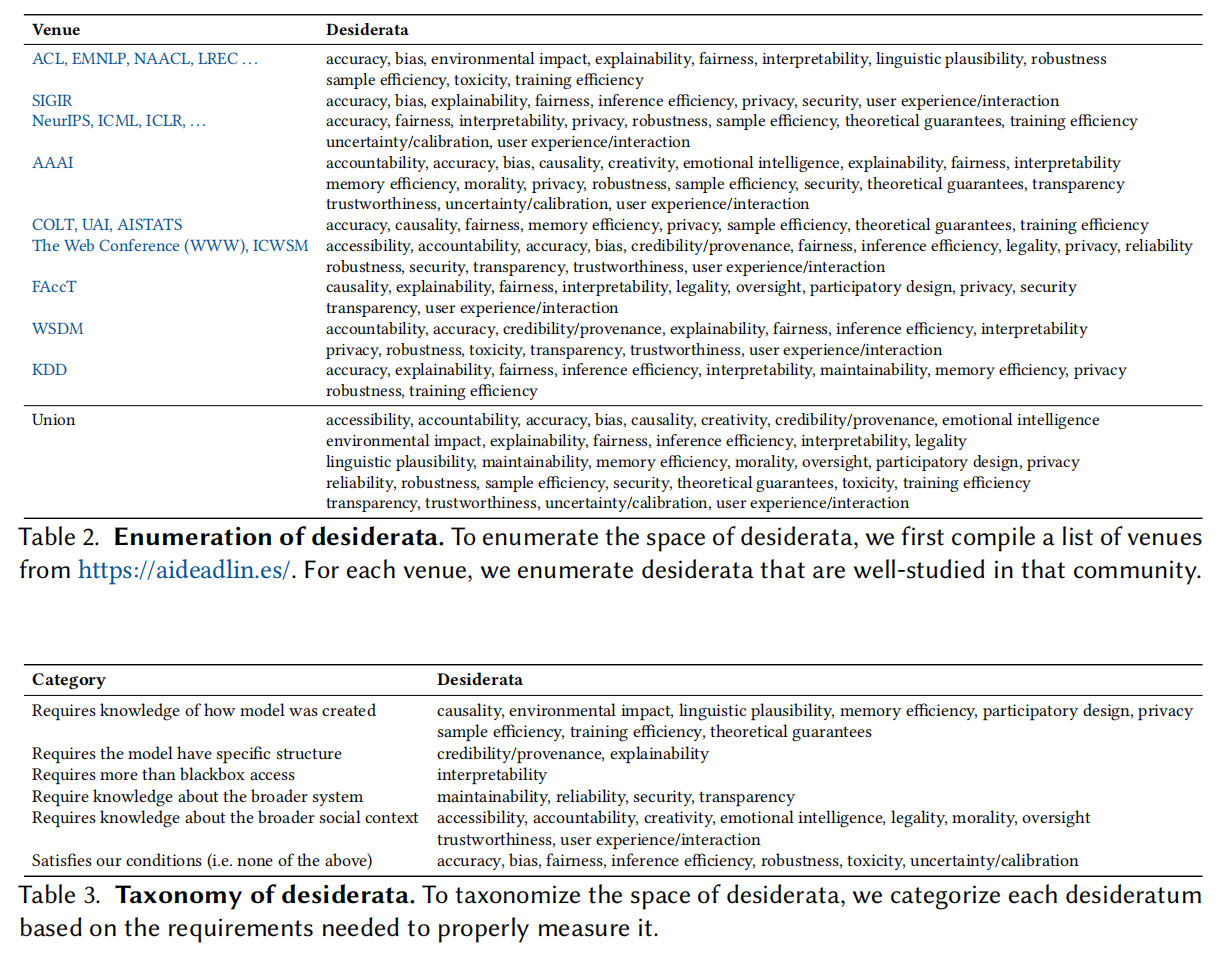
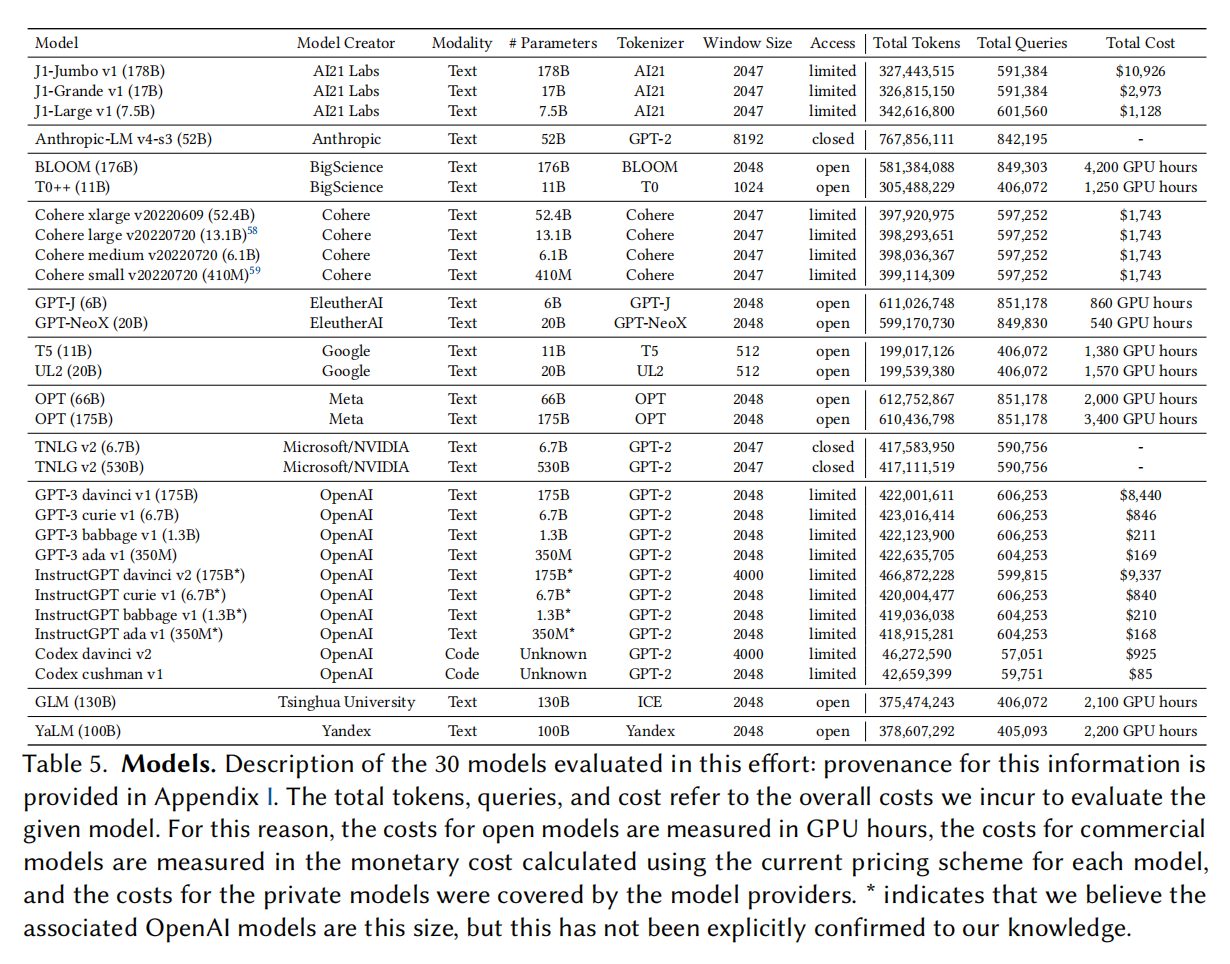
Language models have become the foundation of modern NLP systems, yet evaluation of their capabilities, limitations, and risks remains insufficient. The work first taxonomizes potential application scenarios and evaluation criteria; evaluates seven dimensions (accuracy, calibration, robustness, fairness, bias, toxicity, and efficiency); benchmarks 30 language models across 42 application scenarios; and covers 96% of the scenario space.
Introduction
Core Scenarios
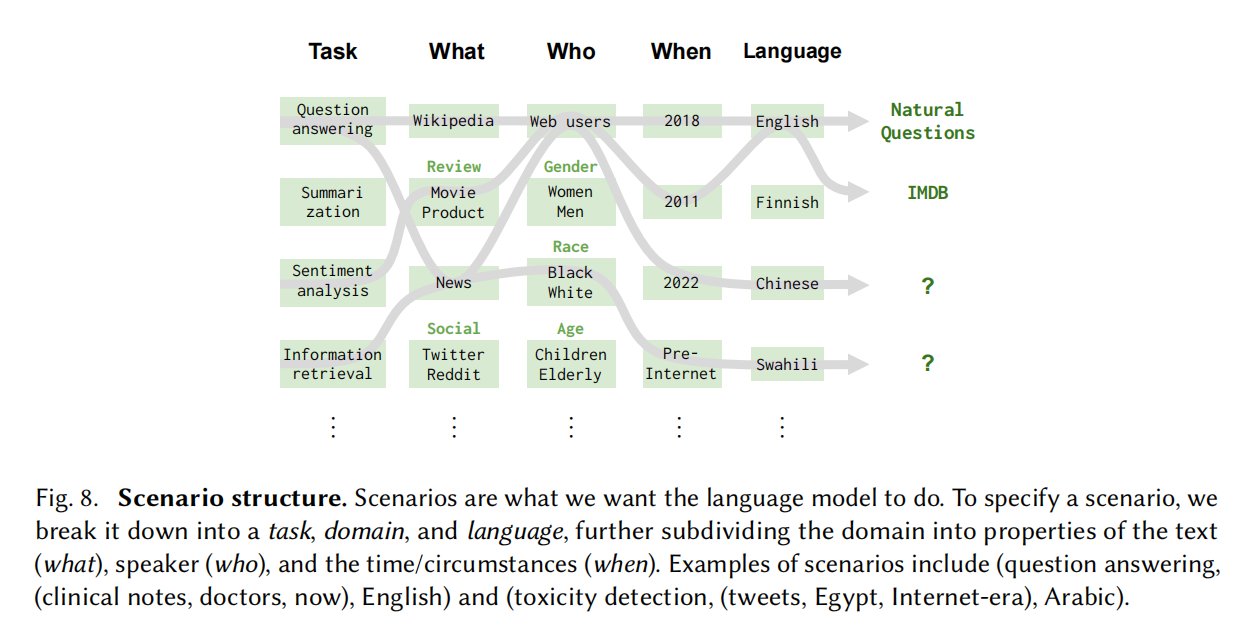
For each setting: what task, what domain the data comes from, who constructed it, when it was collected, and so on.
Taxonomy
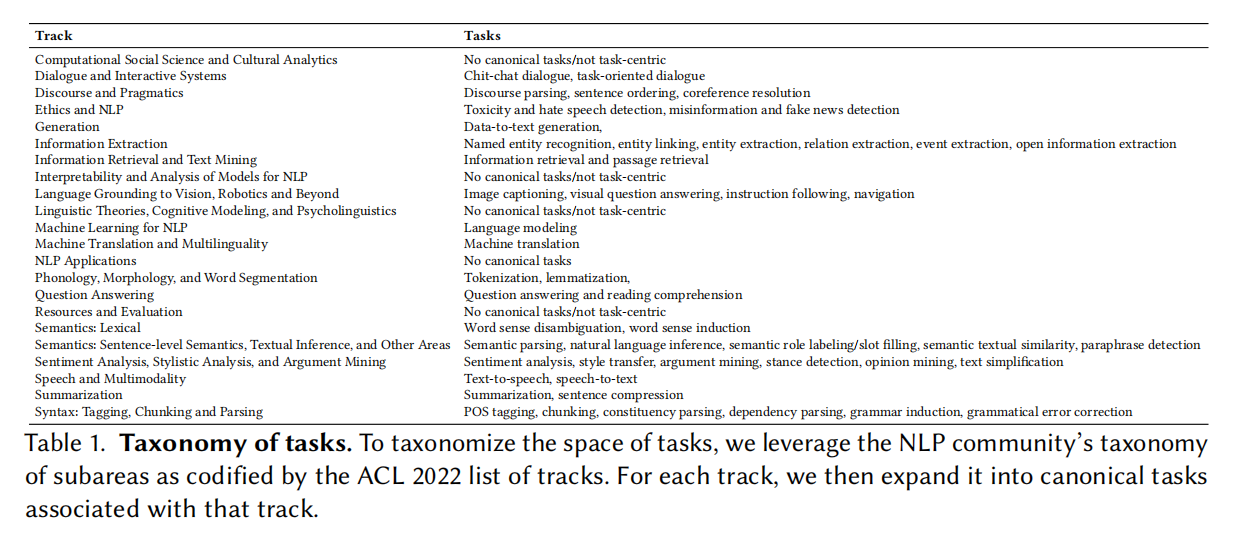
Many tasks are not fully labeled even in academic benchmarks; there are many relatively niche tasks.
Languages are mainly English and Chinese.
Question answering
One form is open-ended QA; another is closed-set QA (choose from a given list of answers).
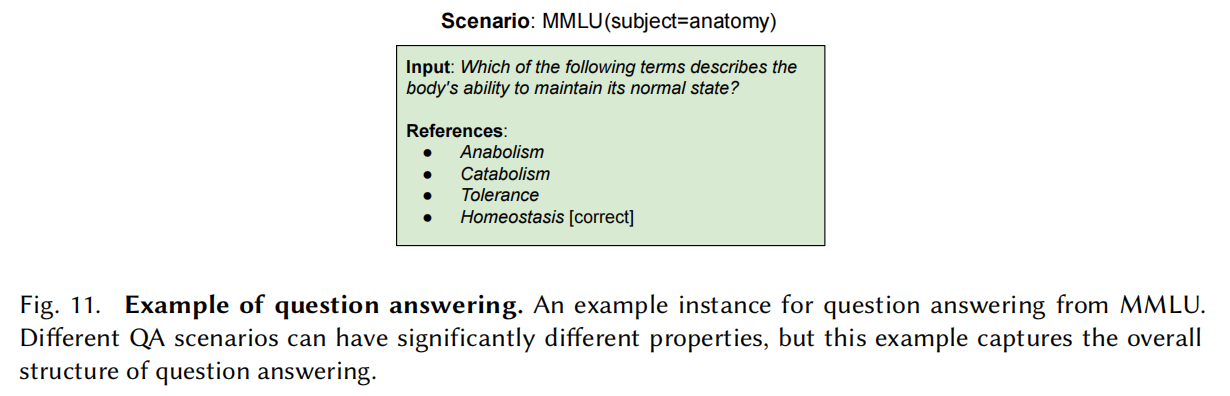
See the paper for specific datasets.
Information retrieval
Given a query q and a corpus C, return top-k documents—essentially a ranking problem.
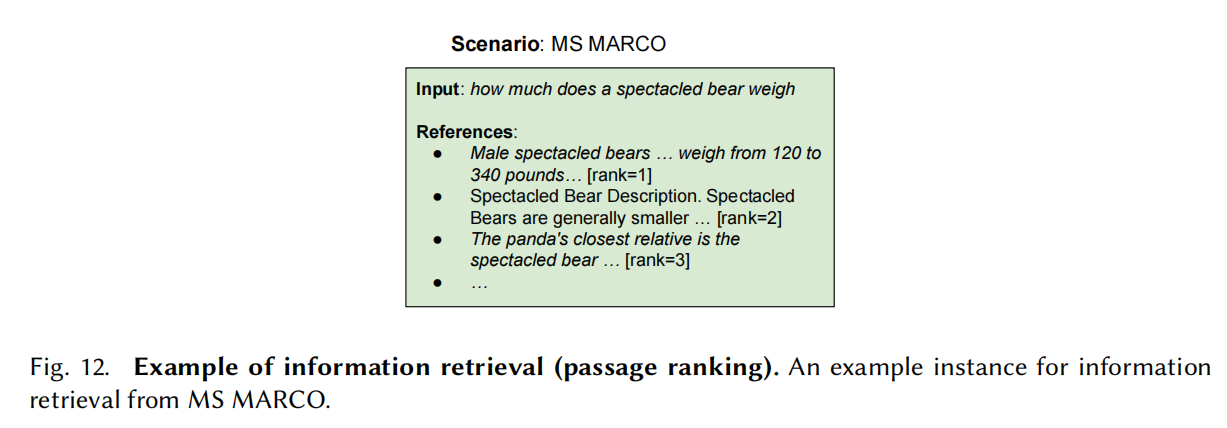
Ranking uses a point-wise approach: concatenate passage c with query q and score the probability that the passage contains an answer to the query; the model’s probability of outputting “yes” is used as the score.
Summarization
Sequence-to-sequence generation.
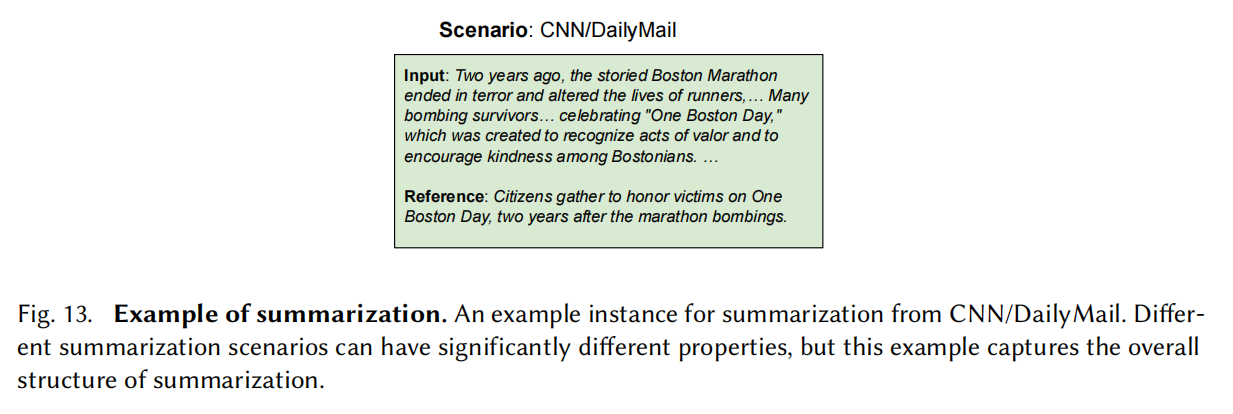
The focus is abstractive ability rather than extractive copying, which also makes evaluation harder.
Abstraction and extraction are partly in tension: less extraction can hurt factual faithfulness; the goal is to keep generated content as correct as possible.
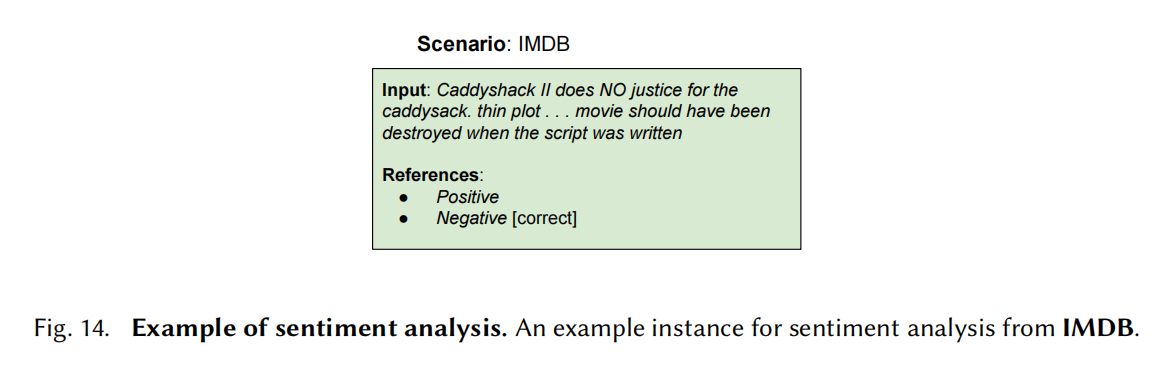
Sentiment analysis
User reviews of products.
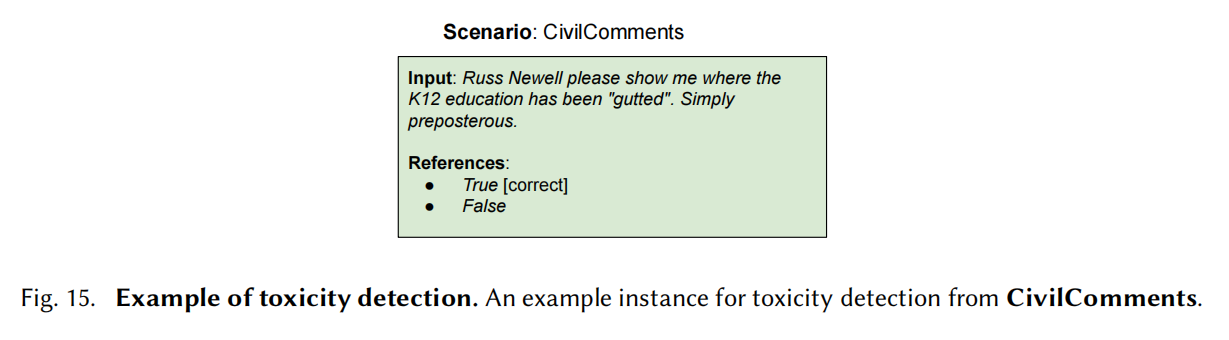
Toxicity detection
Some utterances are acceptable in one cultural context but not in another; the task is to judge whether text is toxic.
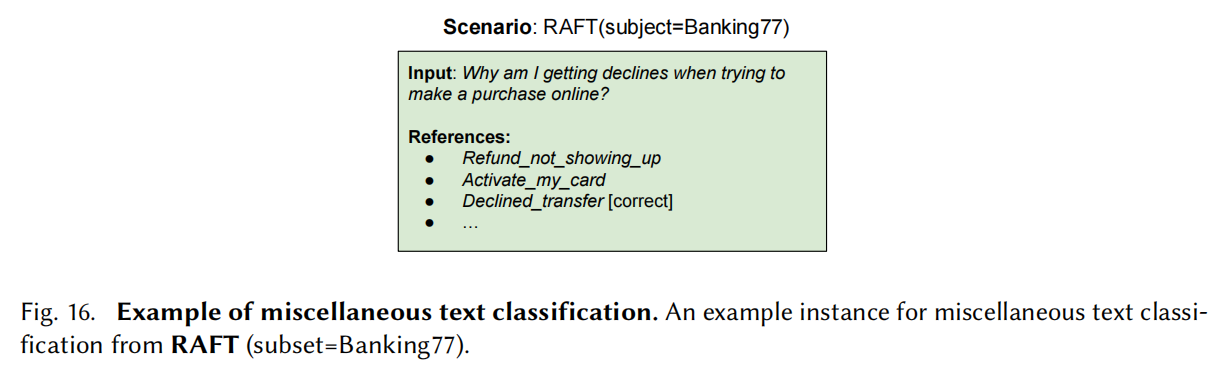
Miscellaneous text classification
Various heterogeneous text classification tasks.
General Metrics
Metrics should not be tied to a single scenario, so the framework mainly uses perturbation-based evaluation.
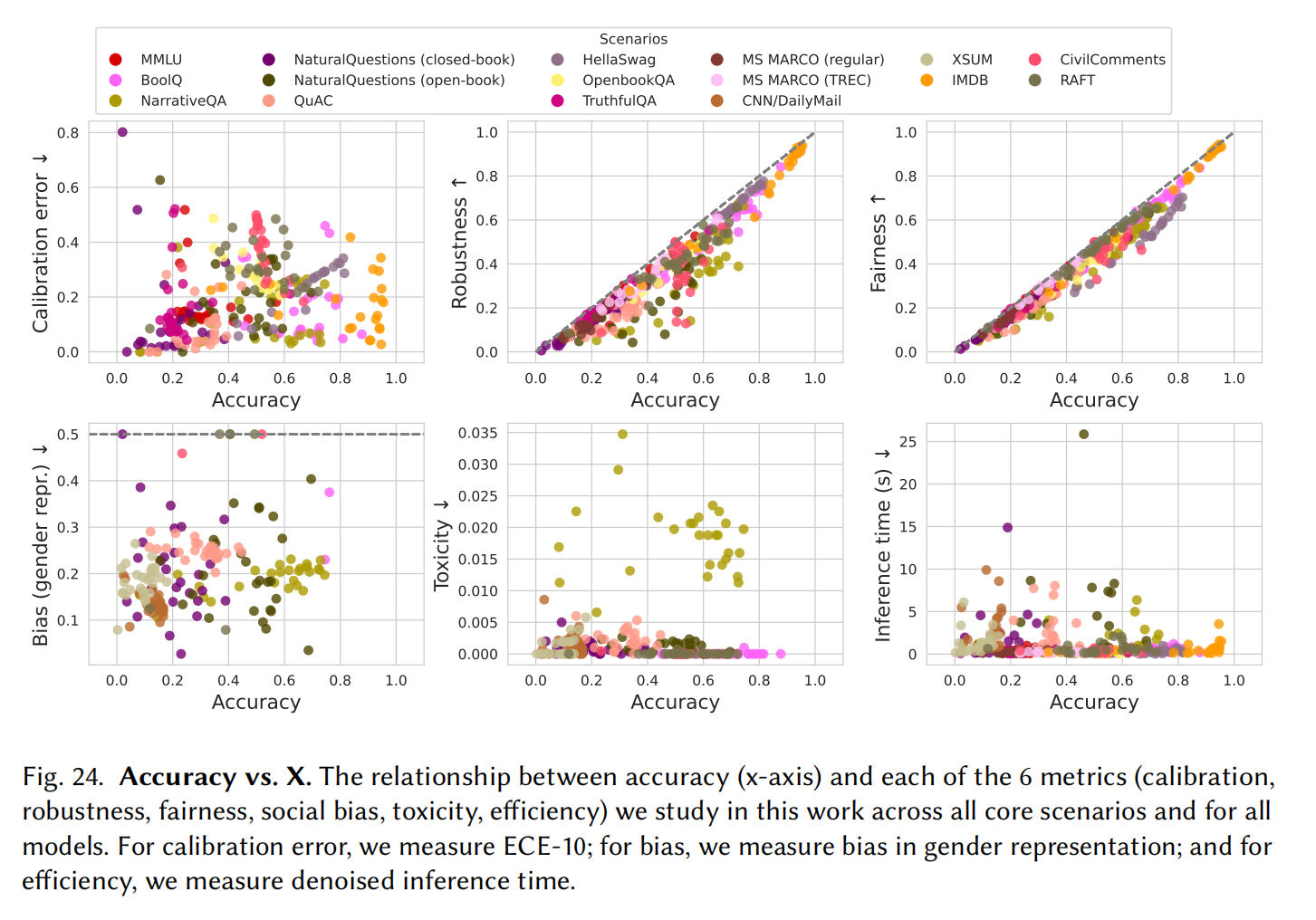
Accuracy
General: exact match, quasi-exact match, F1
Information Retrieval: RR@K, NDCG@K
summarization: ROUGE-2
Language: BPB
Reasoning: F1, exact match
Calibration and uncertainty
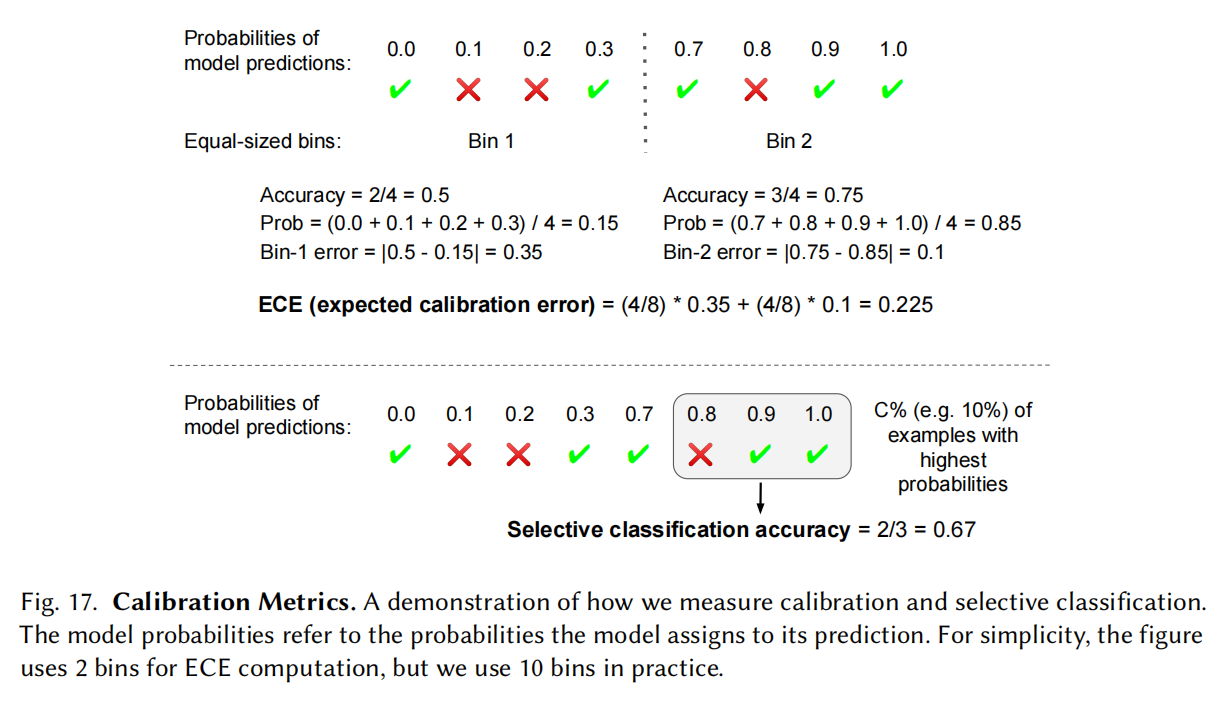
Predicted probabilities should be meaningfully calibrated.
Select by accuracy and then evaluate calibration.
Robustness
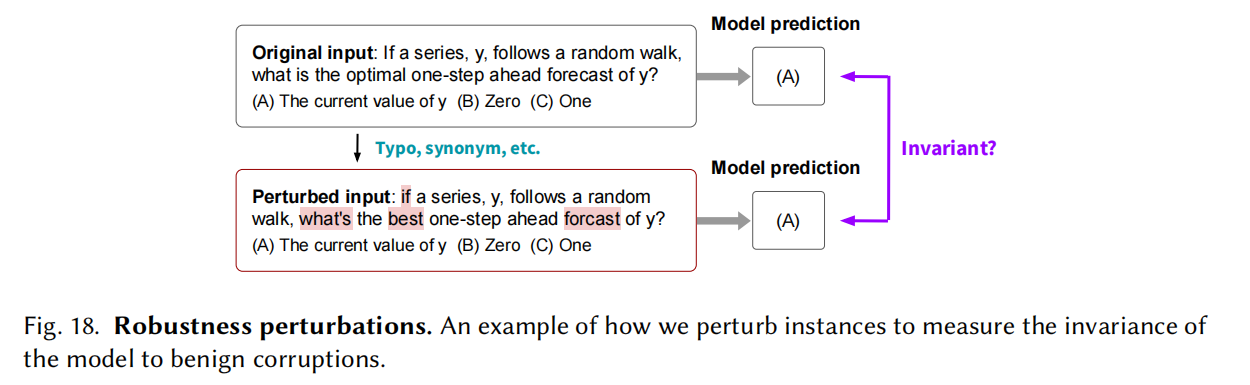
Outputs should stay correct under input transformations—for example, local robustness (models trained on modern English applied to archaic English), and adversarial robustness (adversarial examples designed to mislead the model).
Fairness
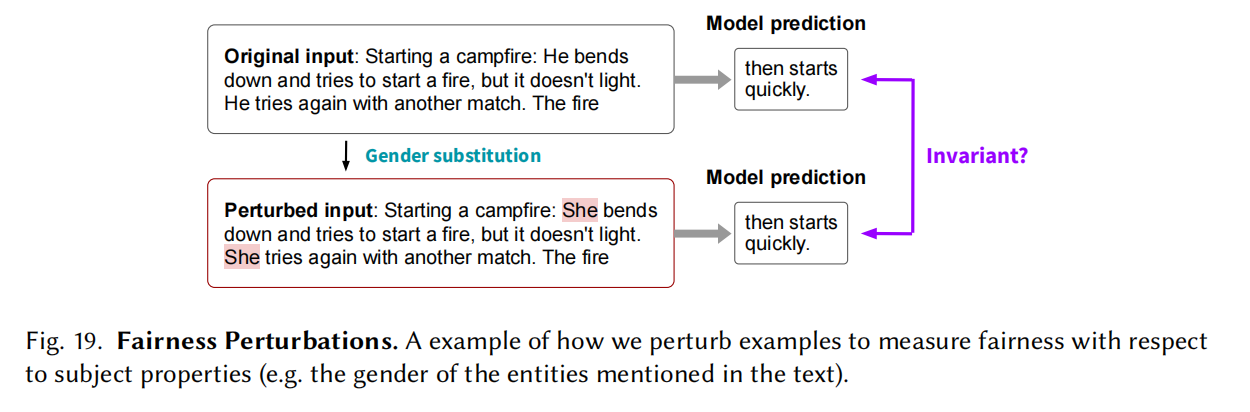
Vary attributes of the speaker or subject (e.g., race or gender) and check whether model outputs remain fair.
Bias and stereotypes
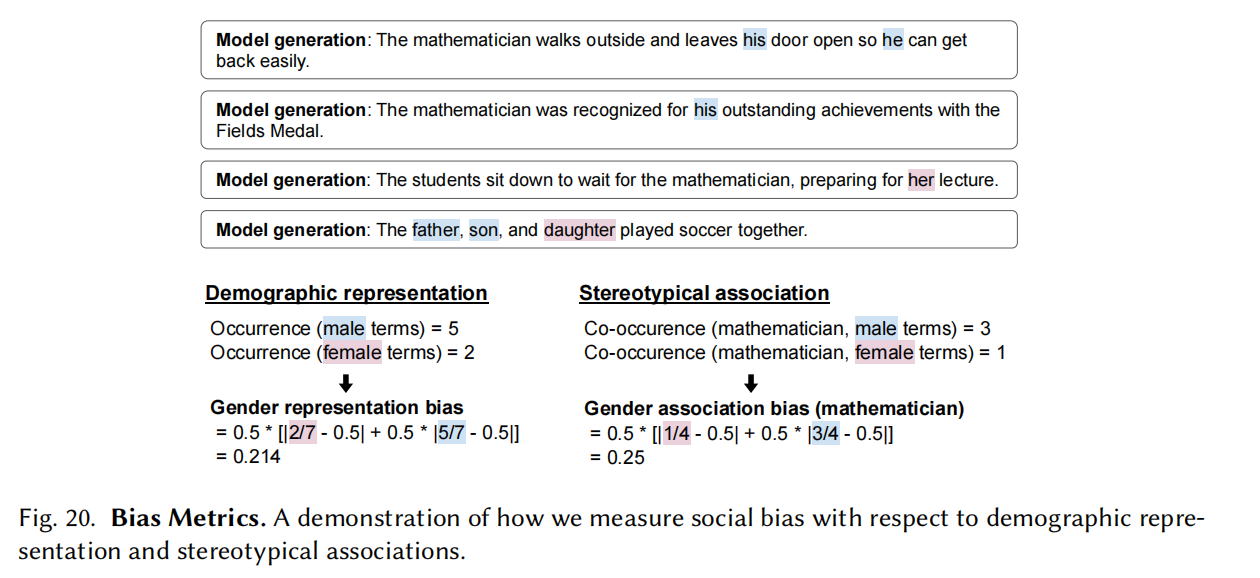
Whether the model erases or over-emphasizes certain groups.
Toxicity
Evaluated with the Perspective API.
Efficiency
Power consumption and carbon emissions.
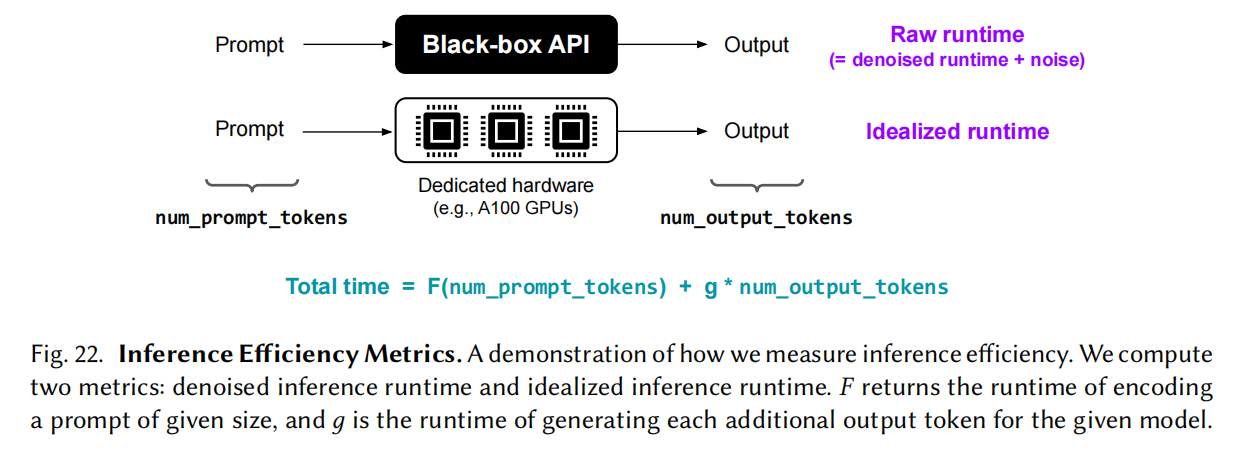
Validity of predictions (in the efficiency sense used in HELM).
Models
Adaptation via prompting
Experiments and results
<HR align=left color=#987cb9 SIZE=1>